New Resources for Researchers Working with Decapod Crustaceans
Authors: Bob Fischer, Texas State University, Meghan Barrett, Indiana University Indianapolis. Arthropoda Foundation
Decapod Crustacean Welfare Resources for Researchers and Veterinarians
The science of decapod crustacean welfare has moved quickly. As recently as a decade ago, there wasn’t much discussion of the idea 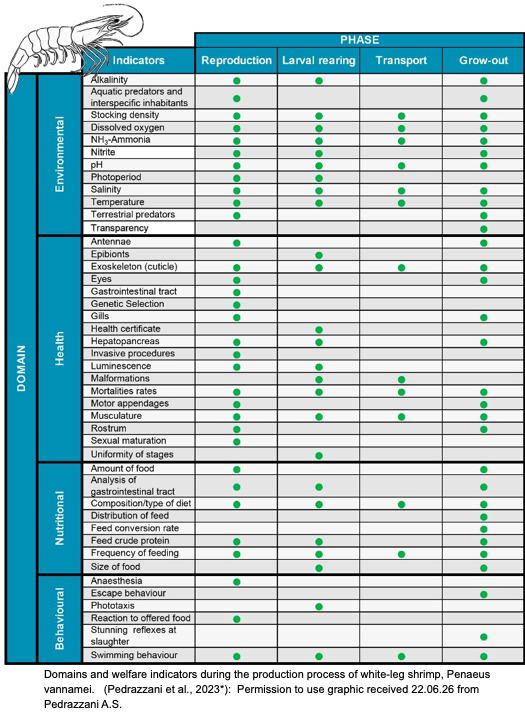 that crabs, lobsters, or shrimps might experience pain. Their responses to noxious stimuli were widely thought to be reflexive—or, in any case, not best explained by negative feelings. Now, however, experimental work has shown that decapods have some of the neurophysiological and behavioral indicators of pain. A landmark 2021 report commissioned by the UK government—Review of the Evidence of Sentience in Cephalopod Molluscs and Decapod Crustaceans—drew on over 300 scientific studies to assess this evidence systematically, concluding that it is strong enough to justify precautionary measures with respect to potentially aversive uses of decapods. That conclusion informed the UK's Animal Welfare (Sentience) Act 2022, which made it possible to extend welfare legislation to these animals. Globally, as interest in decapod welfare continues to grow, veterinarians can assist stakeholders and practitioners in understanding the best practices for promoting health and well-being in crustaceans.
For researchers, the shifting scientific and policy landscape raises a practical question: How should we understand what responsible care involves for these animals? Until recently, there has been little species-appropriate guidance available. Three resources help fill that gap and can be used by veterinarians to guide best practice conversations or make direct recommendations to researchers.
Key Resources at a Glance
Three resources are especially useful for research teams and veterinary advisers:
- IWRS Guidelines for Protecting and Promoting Decapod Crustacean Welfare in Research
- CITI Program course: Working with Decapod Crustaceans in Research Settings
- Veterinary and laboratory animal anesthesia references covering invertebrates and crustaceans
Research Guidelines
The Insect Welfare Research Society (IWRS) offers Guidelines for Protecting and Promoting Decapod Crustacean Welfare in Research, which were developed by a team of researchers from institutions across the UK and US. The guidelines cover the full arc of a research project, beginning with experimental design (including the use of power analyses to minimize animal numbers) and the importance of attending to the welfare implications of different sampling strategies (with attention to bycatch and collection frequency). Sections on transportation and handling provide some species-specific guidance, including particular considerations for soft-shelled individuals, gravid females, and photophobic species.
The housing section calls attention to water quality parameters (dissolved oxygen, ammonia, nitrites, nitrates), tank system design, lighting and noise mitigation, environmental enrichment, and escape prevention. Subsequent sections address nutrition and feeding regimes, molt monitoring, disease management and biosecurity, the use of invasive methods, and anesthesia—noting ongoing uncertainty about whether available agents produce true unconsciousness or merely immobilization. The killing section recommends terminal anesthetic overdose or electrical stunning, advising against chilling, boiling, or freshwater immersion except under anesthesia.
The guidelines are grounded in the 3Rs framework and are designed to evolve as the science does. They offer principled recommendations rather than rigid prescriptions, flagging areas of genuine uncertainty clearly. The document is freely available at insectwelfare.com/research-guidelines.
CITI Training Course
Alongside the guidelines, a new CITI Program course—Working with Decapod Crustaceans in Research Settings—provides structured training for researchers and institutional personnel. Developed by Adam Powell (University of Stirling, NACWO), the course comprises six required modules: an introduction to decapods and welfare concerns; biological features and behavioral characteristics; stressors and stress responses; husbandry best practices and common procedures; veterinary concerns and diseases; and anesthesia and ethical killing, including occupational health considerations.
Textbooks on Invertebrate Veterinary Medicine and Laboratory Decapod Anesthesia and Analgesia
Veterinarians interested in decapod crustacean health and veterinary medicine should consider Chapter 16 of the Lewbart (2022) Invertebrate Medicine textbook (Wiley). The chapter covers diseases affecting crustaceans, including gas bubble, shell, white spot, and necrotizing hepatopancreatitis disease that may appear in zoological, farmed, or research contexts and require treatment.
Veterinarians advising laboratory decapod researchers institutions may also benefit from reviewing the invertebrates chapter in Dyson et al. (2023) Anesthesia and Analgesia in Laboratory Animals (Academic Press). This chapter provides recommendations for appropriate types of anesthesia/analgesics, dosing, and delivery mechanisms for a variety of crustaceans and may serve as a starting point for improving invasive research practices.
Getting Started
These resources are well-suited to a range of uses beyond individual self-training. Graduate students and postdocs beginning work with decapods for the first time will find the CITI course a natural onboarding tool; the IWRS guidelines and laboratory anesthesia text can serve as companion references throughout a project. Lab groups might use the guidelines as the basis for a protocol review or journal club discussion, particularly the sections on housing, anesthesia, and killing, where local practice may not reflect current best evidence. Aquatic veterinarians advising facilities on decapod care will find these resources useful for structuring consultations, identifying specific health issues, or establishing baseline standards. Instructors in animal science, marine biology, or research ethics courses may also find it helpful to pair a structured training module and a citable guidelines when introducing students to welfare considerations for non-model invertebrates.
* Pedrazzani A.S., Cozer N., Quintiliano M.H., Tavares C.P.d.S., da Silva U.d.A.T.,Ostrensky A.. Non-Invasive Methods for Assessing the Welfare of Farmed White-Leg Shrimp (Penaeus vannamei). Animals 2023, 13, 807. https://doi.org/10.3390/ani13050807