Exploring sustainable alternatives in aquaculture feed
As the aquaculture industry continues to expand, the sustainability of aquaculture feed and fish feed remains a key challenge. Feed production accounts for a significant proportion of aquaculture’s environmental footprint, particularly within aquaculture and sustainability discussions, with particular concern around the use of imported ingredients such as soya. As highlighted in Aquaculture on the Rise, this rapid growth brings increasing pressure to develop more sustainable practices across the sector.
Fish feed in aquaculture has traditionally relied on ingredients such as soya and aquaculture fish meal. While effective, these inputs raise concerns around supply chains, emissions, and long-term resilience. This has led to growing interest in how sustainable aquaculture can be achieved through alternative ingredients and more eco-friendly aquaculture approaches.
Soya-based feed ingredients are widely used due to their high protein content and availability. However, their production is often linked to deforestation, high carbon emissions, and long supply chains. This has led to increasing interest in identifying alternative, more sustainable feed sources that can support both environmental goals and fish health.
The search for alternative ingredients
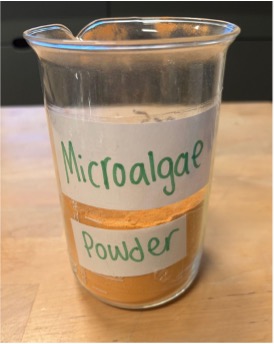 A range of novel ingredients is currently being explored across aquaculture research and industry. These include insect protein, single-cell proteins, and algae-based solutions.
Fish nutrition is central to this conversation. Understanding fish nutrition facts, fish nutritional content, and overall fish nutrition value is essential when developing feed for fish farming. Researchers are increasingly focused on maintaining optimal nutrition while reducing environmental impact.
Among these, microalgae have attracted particular attention. Microalgae are naturally rich in proteins, lipids, and bioactive compounds, and form the base of many aquatic food webs. Because of this, they are seen as a biologically relevant feed ingredient with potential functional benefits.
Research is ongoing into how microalgae may contribute to improved fish health, including immune support and gut function, while also offering a more sustainable production profile compared to conventional crops. In addition, microalgae can be cultivated using fewer land resources and, in some systems, can utilize waste streams, further supporting circular production models.
Circular approaches to feed production
Sustainability in aquaculture feed is not only about the choice of ingredients, but also about how those ingredients are produced and sourced.
Circular economy approaches are gaining traction, particularly where by-products or waste materials can be repurposed into valuable inputs. In the context of microalgae, some production processes generate residual biomass after extracting high-value compounds such as pigments. This leftover material, which still contains nutritional value, presents an opportunity for reuse within feed applications rather than disposal.
Such approaches can help reduce waste, improve resource efficiency, and lower the overall environmental impact of feed production.
As part of ongoing efforts to support knowledge sharing in aquatic animal health and sustainability, WAVMA continues to highlight emerging topics across the aquaculture sector.
A student-led perspective on innovation in aquaculture feeds
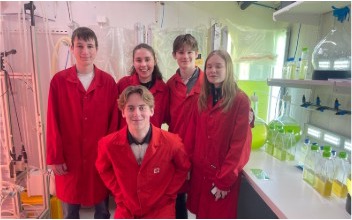 Emerging ideas and innovation within the aquaculture industry are not limited to established research institutions or commercial producers. A student-led initiative in Trondheim, Norway, offers an example of how early-stage innovation is contributing to the conversation around sustainable feed.
Sirkulare UB, formed by students at Thora Storm High School, is exploring the use of microalgae in aquaculture fish feed. Their work focuses on repurposing by-product biomass, aligning with circular economy principles and supporting more eco-friendly aquaculture approaches.
The project has involved engagement with research environments such as the SINTEF Sea Lab, as well as plans for further collaboration with the Norwegian University of Science and Technology (NTNU). As an early-stage project, they are initially exploring the pet fish feed market, with plans to expand into broader aquaculture feed applications.
Aquaculture food evolution moving forward
As the aquaculture sector continues to evolve, the development of sustainable feed solutions will remain a priority. Innovations in ingredient sourcing, production methods, and nutritional science all have a role to play.
While many of these solutions are still under investigation, initiatives across different levels, from academic research to student-led projects, highlight the breadth of interest and innovation in this area.
For aquatic animal health professionals, these developments are particularly relevant, as feed composition and quality are closely linked to fish health, welfare, and overall system sustainability.
Projects such as Sirkulare UB offer an encouraging example of early-stage innovation in this space, and it will be interesting to follow how their work develops as they continue to explore the potential of microalgae in aquaculture feed. WAVMA also extends its congratulations to the students involved for taking on such an important and complex topic at an early stage in their careers.